
There’s something about late summer that makes a hardworking corner by the pool door feel especially important. Around my house, that spot seems to collect flip flops, damp sandals, and all the little signs of a day spent outside. This crochet-style flip flop rack is a simple way to tidy that up, and it has the kind of easy charm I’m always drawn to—soft beachy yarn, plain clothespins dressed up a bit, and a humble shower rod doing far more than it was ever meant to do.
I love projects like this because they use familiar materials in an unexpected way, and they don’t ask for fancy tools or a perfect hand. If you can wrap yarn, tie a knot, and clip a clothespin, you can make this. It’s especially nice for a mudroom, pool entry, porch door, lake cabin, or any family back entrance where shoes seem to gather like weeds after rain.
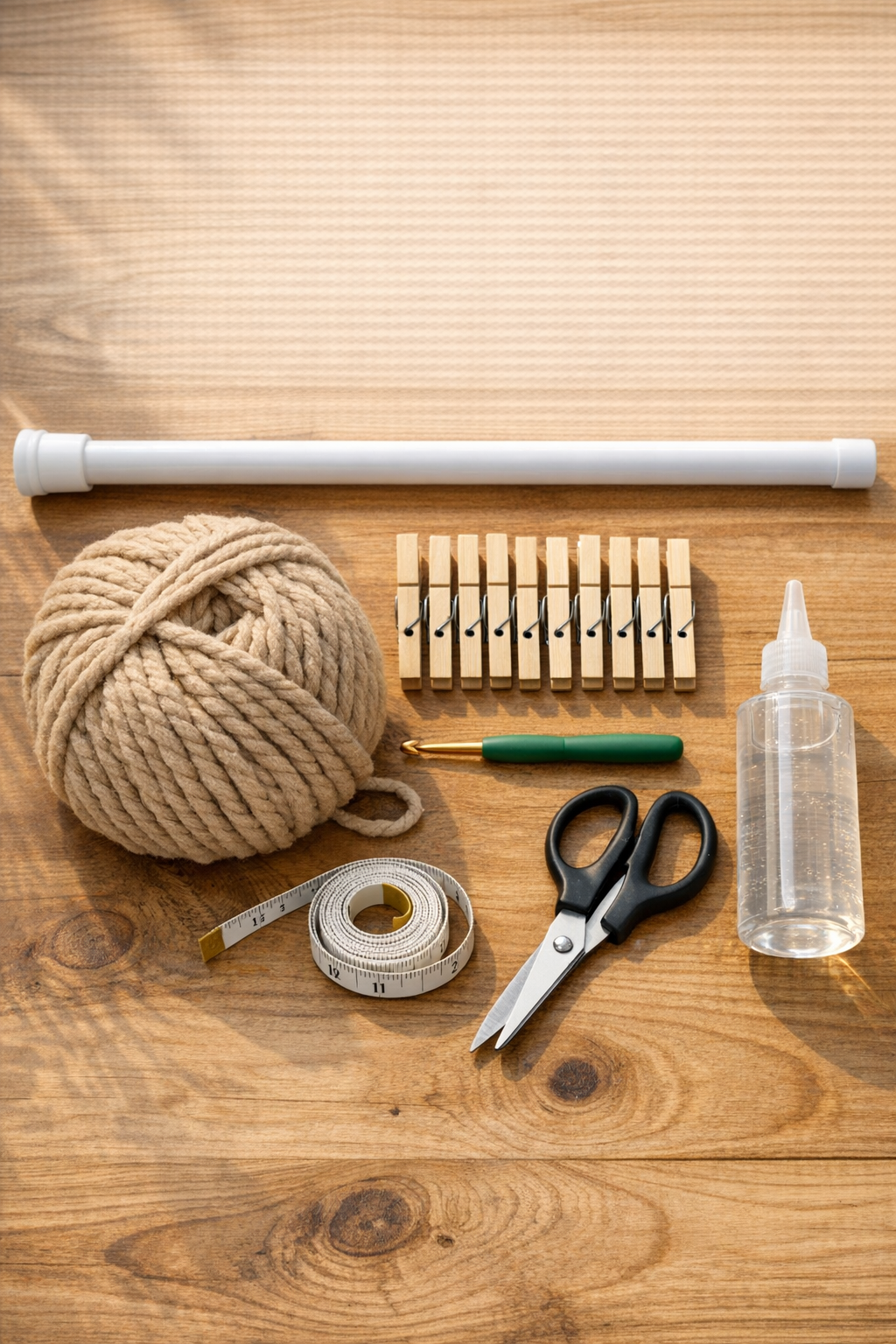
Materials
Instructions
1. Measure the width of the space by your pool door, porch entry, or mudroom wall, then extend the plastic tension shower rod to fit snugly in that opening. Make sure it sits level and secure at a height that lets flip flops hang without dragging on the floor.
2. Wrap each wooden clothespin with the chunky beach sand yarn, adding a tiny dot of clear craft glue at the beginning and end to hold the yarn in place. Cover the wood neatly, but keep the pinching end and spring opening clear so the clothespins still open and close easily.
3. Let the wrapped clothespins dry for 10 to 15 minutes while you prepare the rod covering. Tie the yarn securely onto one end of the shower rod with a double knot.
4. Work a simple crochet chain long enough to span the full rod length, then begin wrapping and looping that chain around the rod as a decorative crocheted sleeve. If you prefer, you can also single crochet directly around the rod in loose, even stitches for a fuller look.
5. Continue covering the rod until most or all of the plastic is hidden, then tie off the yarn with a firm knot and weave in the tail. Keep the crochet snug enough that it won’t slide, but not so tight that it twists the rod.
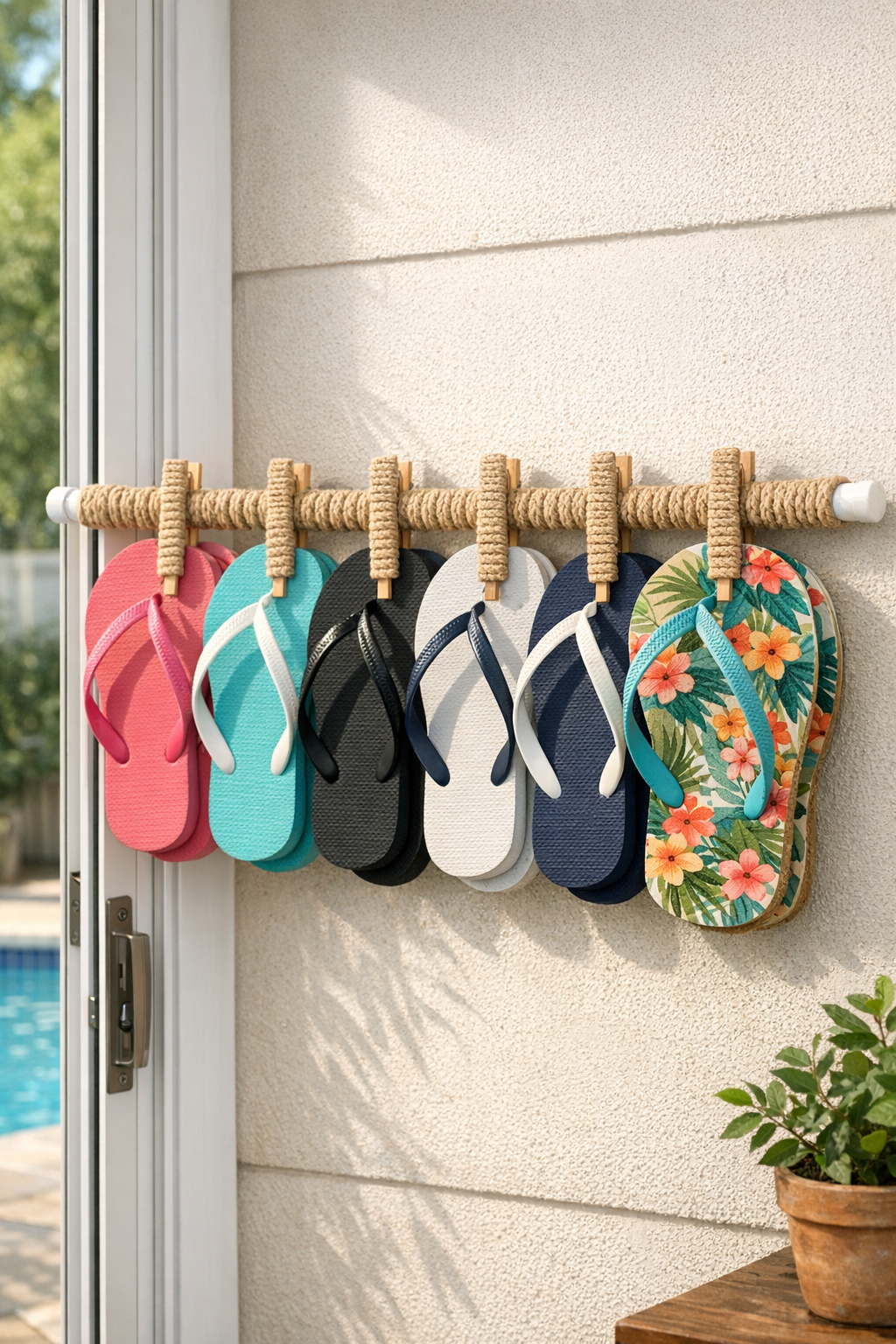
6. Space the wrapped clothespins evenly along the rod, using 2 1/2 to 3 inches between each one for adult flip flops. Clip them directly over the crocheted section so they stay in place and look evenly arranged.
7. Mount the finished rod in place again if you removed it from the doorway or wall space. Tug lightly on each clothespin to be sure nothing shifts before you start hanging sandals.
8. Clip each pair of flip flops by the soles or straps, leaving enough breathing room so damp shoes can air out. Arrange smaller pairs together and heavier sandals near the ends where the rod has the most support.
Variations & Tips
For a fuller crochet look: If you want the rod to look more richly covered, work single crochet stitches directly around it instead of just wrapping a chain. It takes a little longer, but it gives that soft, nubbly texture that looks lovely in late afternoon light.
For outdoor durability: Choose synthetic bulky yarn rather than wool if the rack will live near splashes or humidity. Acrylic or polypropylene yarn holds up better around pool doors and dries faster, which matters in a busy household.
For children’s sandals: Set the clothespins 2 inches apart instead of 3. I’ve found that closer spacing makes a neater row when little grandkid-sized flip flops are involved.
For extra holding strength: If your clothespins feel loose, add a tiny bead of glue where the yarn ends are tucked so nothing unravels over time. Just be careful not to glue the moving spring section shut.
For a softer color palette: Beach sand yarn is pretty and natural, but pale sage, washed blue, or soft driftwood gray also suit a porch or pool entry beautifully. Those faded, easy colors always remind me of end-of-season towels drying on the line.
Placement tip: Hang the rack where air can circulate but direct rain won’t soak it. A covered porch wall, breezeway, or sheltered back entry will help the yarn stay cleaner and the shoes dry faster.
Storage tip: This rack works best for flip flops, slides, and light sandals rather than heavy sneakers. Keeping it to lightweight footwear helps the tension rod stay secure and keeps the whole project looking tidy instead of strained.