
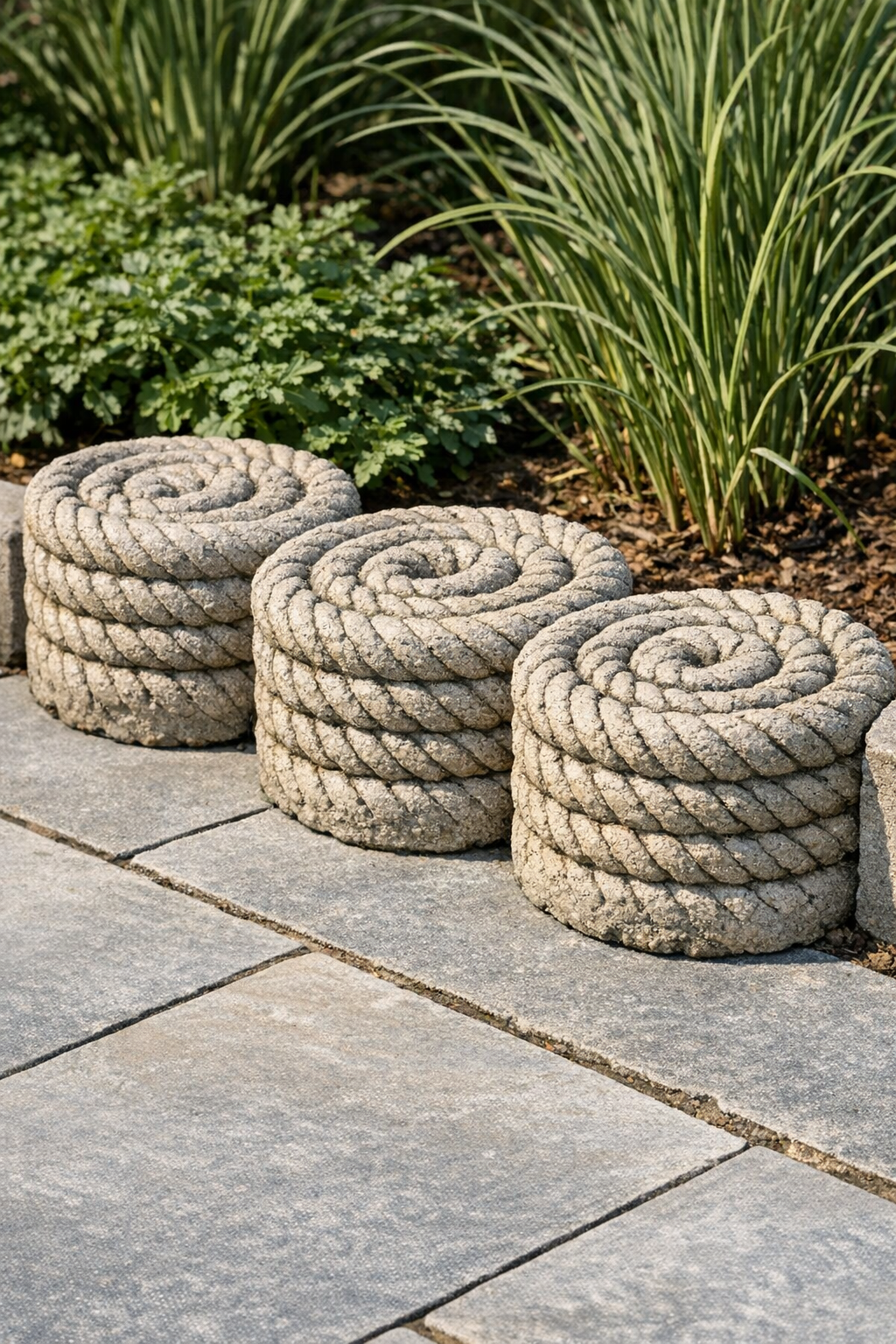
There’s something deeply satisfying about taking a rugged, utilitarian material like thick manila rope and turning it into a solid landscape element that looks almost sculptural when it’s done. In this project, I’m using cement-soaked rope to make heavy coiled patio borders—sturdy, weather-friendly pieces that can edge a bed, frame a container garden, or add a little definition around a seating area without the look of plastic edging.
I like this kind of project because it sits right at the intersection of practical and unexpected. If you’re comfortable mixing a small batch of cement and don’t mind getting your hands messy, this is very doable for a beginner, and it’s especially good for anyone who wants a more organic, handmade look in an outdoor space.
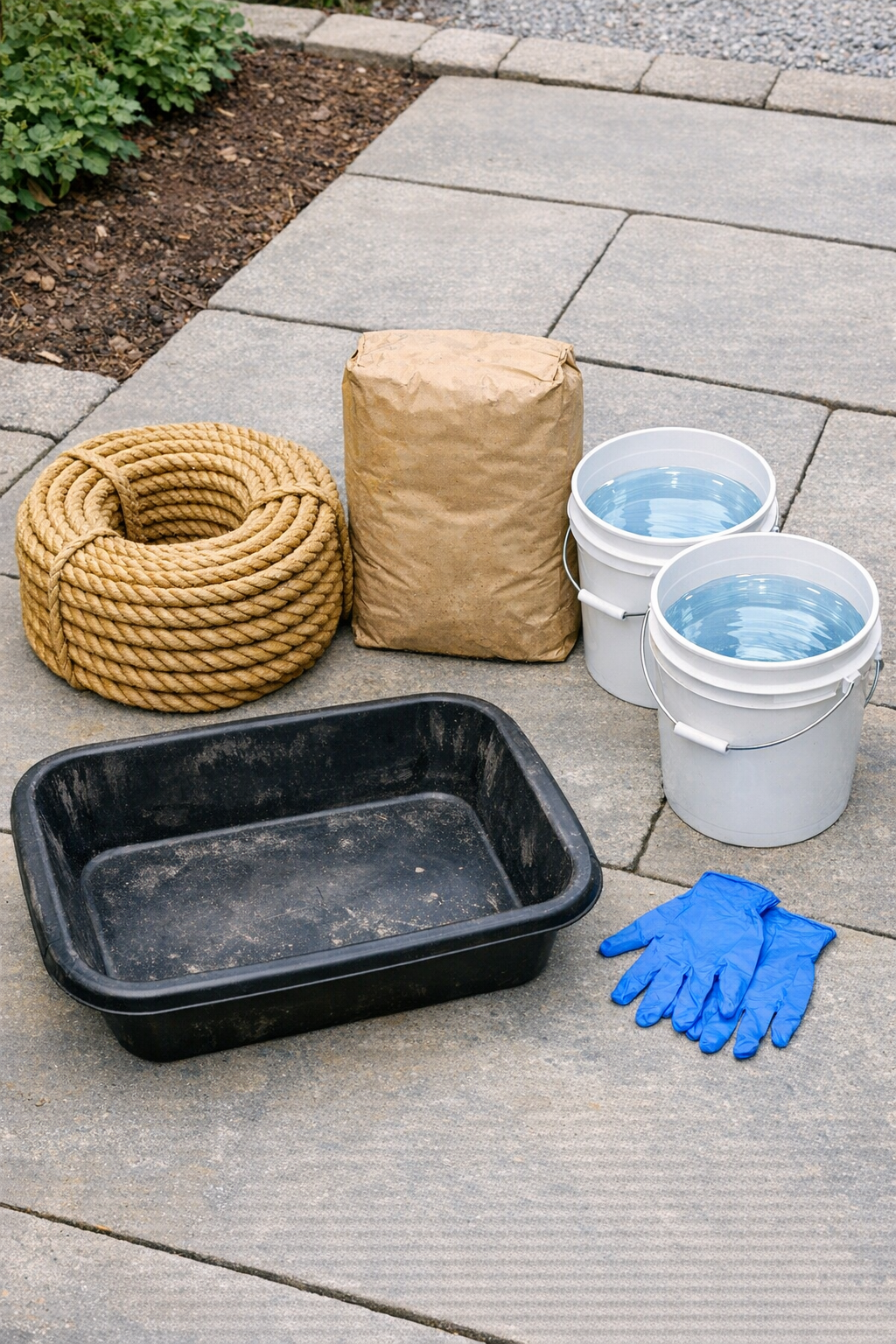
Materials
Thick manila rope, 1 piece measuring 50 feet long and about 1 inch thick
Instructions
1. Choose a flat work area outdoors or in a garage, and protect it with a plastic tarp or sheet of heavy-duty plastic because cement splatter is hard to remove once it cures.
2. Measure the border space you want to edge and decide how large to make each coil; for a modular patio border, I usually make coils about 12 to 16 inches across so they’re heavy but still manageable.
3. Cut the manila rope into equal lengths if you want multiple matching border pieces; a 50-foot rope will typically give you three substantial coils depending on diameter.
4. Mix the cement with water in a large bucket or mixing tub until it reaches the consistency of thick pancake batter; it should fully coat the rope without being so watery that it runs off immediately.
5. Coil one rope length dry first to check the size and shape, then loosen it back out so you know roughly how tightly to wind it once it’s coated.
6. Submerge the first rope length into the wet cement mixture and work it through with gloved hands so the fibers are thoroughly saturated from end to end.
7. Lift the coated rope out slowly, letting excess cement drip back into the tub for a moment, then begin coiling it immediately on the protected flat surface.
8. Press each round snugly against the last as you build the spiral, shaping a tight, flat coil; if needed, smear extra cement over the top and between the rope rows to lock everything together.
9. Tuck the rope end neatly along the outside edge or into the side of the coil, then pat and smooth any rough spots so the border piece cures as one solid form.
10. Repeat the soaking and coiling process for the remaining rope lengths, keeping the size and thickness as consistent as possible if you want a uniform border line.
11. Let the coils sit undisturbed until they are firm enough to hold their shape, then leave them to cure fully for 24 to 48 hours, depending on temperature and humidity.
12. Once cured, place the heavy coiled borders along your patio edge, around planters, or beside a garden bed, setting them directly on level ground for the most stable result.
Variations & Tips
For a smoother finish: Brush or hand-smooth a thin extra layer of cement over the outer surface right after coiling if you want less rope texture showing in the final piece.
For a more rustic look: Leave the rope ridges visible and avoid over-smoothing; I think this gives the border more character and makes the material transformation more dramatic.
Work in small batches: Fast-setting cement can surprise you if you haven’t used it often, so I recommend mixing only enough for one coil at a time rather than trying to soak all the rope at once.
Mind the weather: On very hot or windy days, the cement can dry too quickly on the surface, so a shaded workspace usually gives you more control.
Make matching sections: If you’re edging a larger area, use a simple template marked on the tarp—like a traced circle—to keep each coil the same diameter.
Add weight strategically: These are best used as freestanding border accents on flat ground; if you need extra stability, nestle the finished pieces slightly into soil or gravel.
Expect natural variation: Manila rope absorbs cement unevenly in places, and that’s part of the charm; like a good loaf of bread or a hand-formed dumpling, each piece comes out with its own texture.