
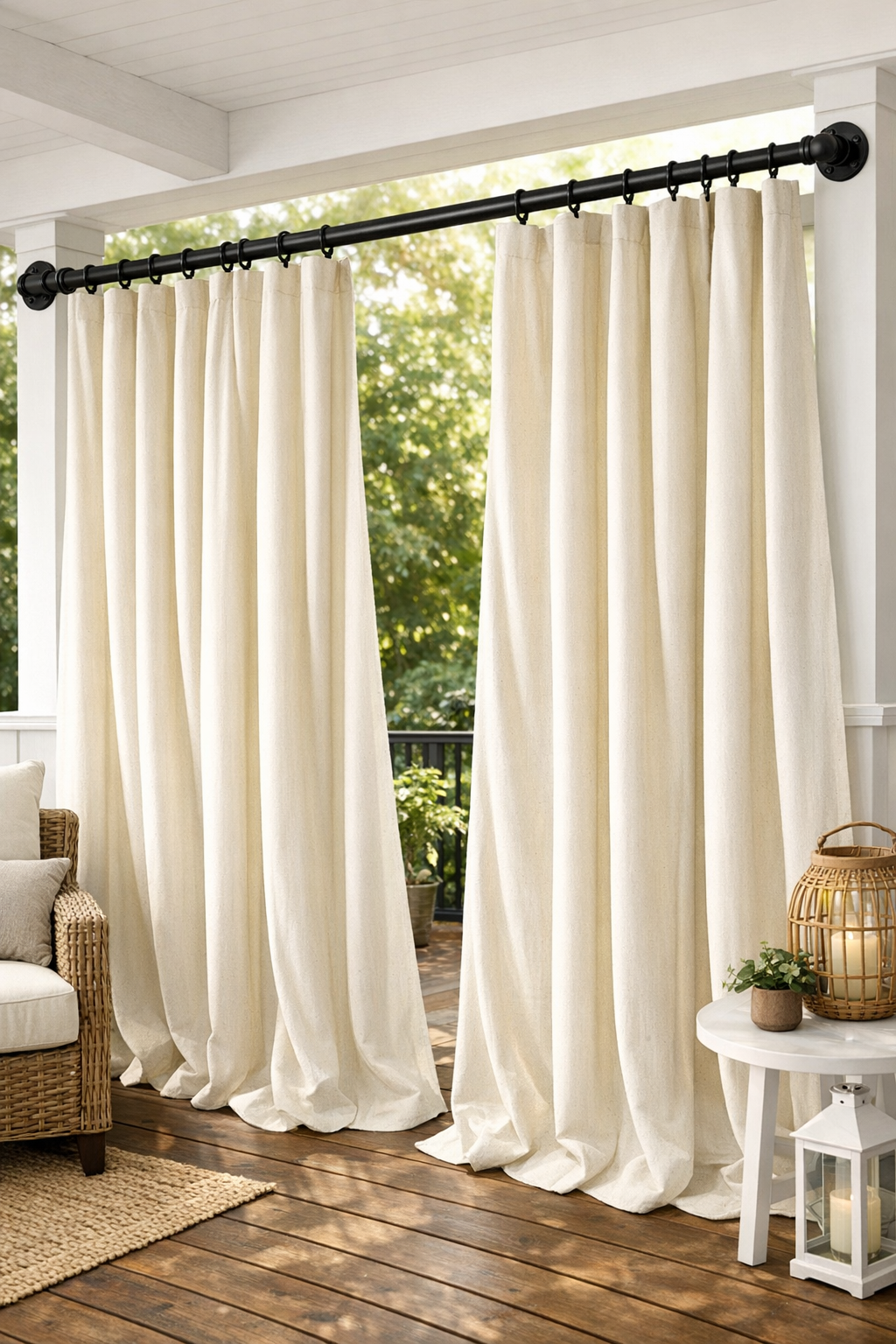
I love a porch project that changes the whole mood of an outdoor space without requiring custom millwork or a huge budget, and this curtain wall does exactly that. By draping simple cream drop cloth panels over black iron pipe mounted between porch posts, you get the look of a breezy outdoor room divider that feels polished, relaxed, and surprisingly high-end.
This is a great project for anyone who wants more shade, privacy, or softness on a patio without committing to permanent walls. I’m always drawn to practical materials that can do double duty, and drop cloths are one of my favorite “humble ingredients” in home projects for the same reason pantry staples are so satisfying in the kitchen: affordable, versatile, and better than expected when handled thoughtfully.
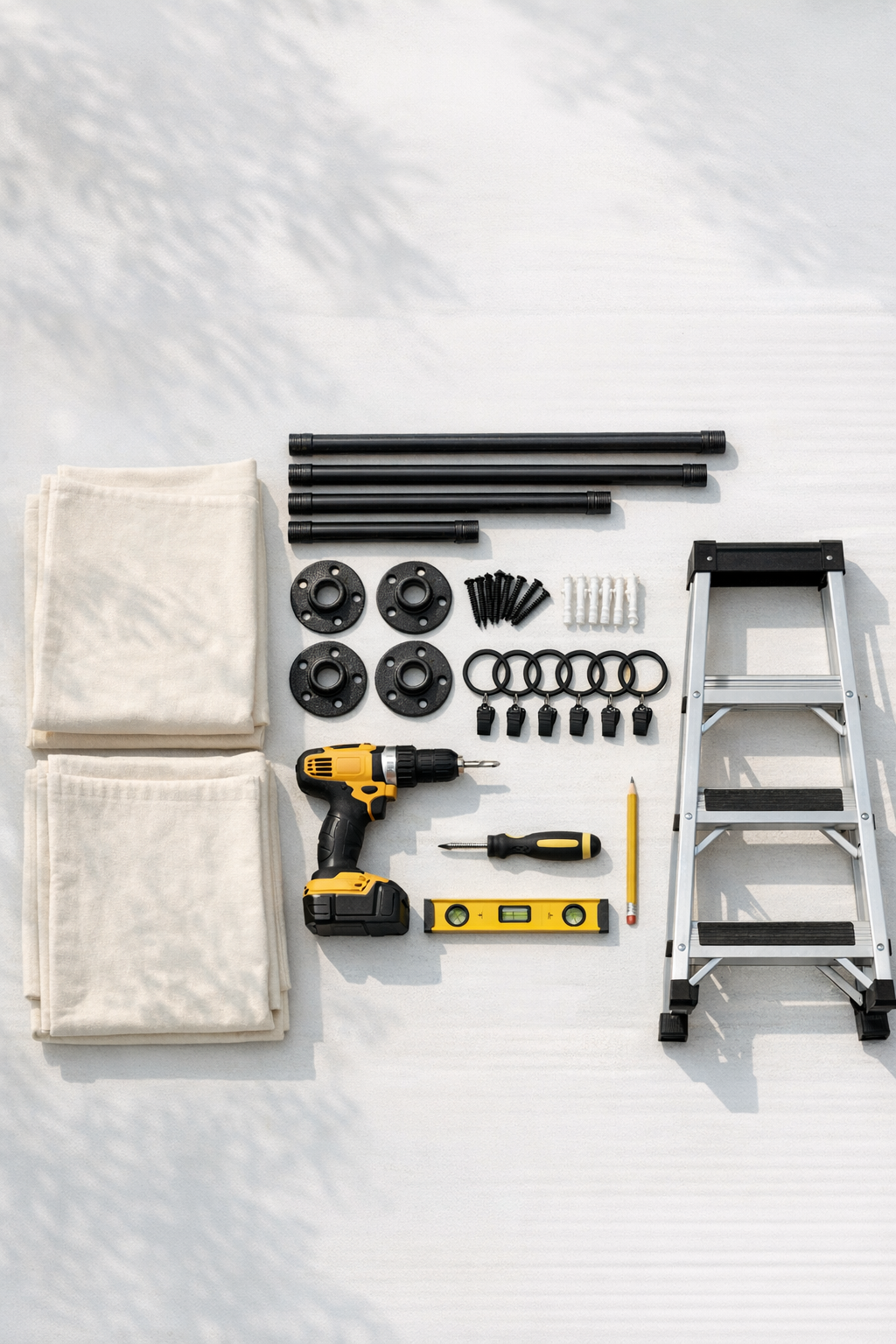
Materials
Instructions
1. Measure the clear distance between your porch posts and the height from the mounting point down to the floor. Decide whether you want the drop cloth panels to just skim the ground or hang 1 inch above it for easier cleaning.
2. Prewash and dry the drop cloths if you want a softer drape and to remove stiffness. I usually do this because the fabric relaxes beautifully, much like letting dough rest before shaping.
3. Iron or steam the drop cloths so the folds are easier to work with. If the cloths are too long, fold the top or bottom edge to the desired finished length and secure it with hem tape or a sewn hem.
4. Mark the flange locations on the inside faces of the porch posts, keeping both sides level with each other. Position the pipe high enough that the draped fabric will hang evenly and still clear the floor as planned.
5. Hold each flange in place and mark the screw holes with a pencil. Drill pilot holes, then install anchors if needed for your mounting surface.
6. Screw the floor flanges securely to the porch posts using exterior-rated screws. Check again with a level before fully tightening so the pipe will sit straight.
7. Thread the black iron pipe into one mounted flange, or assemble the pipe sections with couplers first if needed. Test fit the opposite end into the second flange and tighten everything until the rod feels solid.
8. Add curtain clip rings to the pipe before closing the final connection if your setup requires it. Space the rings evenly across the rod so the fabric will gather in soft, balanced folds.
9. Drape each drop cloth panel over the pipe or clip the top edge into the rings, depending on the look you want. For the casual, designer-style version, I prefer folding the panel over the rod by 8 to 12 inches so it reads more like tailored outdoor drapery than a standard curtain.
10. Adjust the folds so the panels hang evenly and cover the span the way you want. If you’re using two panels, overlap them slightly at the center for fuller coverage and a more finished appearance.
11. Spray the fabric lightly with fabric protector if the curtain wall will be exposed to moisture and dirt. Let it dry fully before tying the panels back or leaving them closed.
12. Add tiebacks if desired, then step back and make final tweaks to the drape and spacing. The finished wall should feel soft and airy while the black pipe gives it enough structure to look intentional.
Variations & Tips
For a fuller look: Use three narrower panels or extra-wide drop cloths so the fabric gathers generously. Outdoor curtains look much richer when the finished width is at least one and a half times the span.
For windy patios: Sew small fabric pockets into the bottom hem and slide in light wooden dowels or slim curtain weights. That added weight helps the panels hang straight and flap less.
For easier washing: Clip the panels to rings instead of wrapping them directly over the pipe. It makes seasonal removal much simpler, especially if your porch sees pollen, rain splash, or city dust.
For a more tailored finish: Hem all cut edges and keep the top fold depth identical across every panel. That bit of precision is the home-project version of careful knife work in cooking: small effort, noticeably better result.
For stain resistance: Choose painter’s drop cloths made from tightly woven cotton canvas and treat them with outdoor fabric spray before hanging. Reapply the spray as needed through the season.
Mounting tip: If your porch posts are hollow, weak, or wrapped in thin trim, locate solid framing before installing the flanges. The pipe needs a secure anchor because fabric can pull harder than people expect when wet or windy.